
Viewing 43 - 48 out of 49
Veterinary Topics

Equine
Hives and Skin Allergies
The skin is the largest organ in the body and serves many important functions. In spite of its usefulness, a horse’s skin can also develop redness, itchiness or hives in response to various substances in the environment. These kinds of allergic reactions can be caused by things eaten, inhaled or touched
Equine
Hernias
Hernias A hernia is a tear in the body wall of a horse that allows the internal organs to push through to a place where they don’t belong. There are several types of hernias. They can affect horses of any age or breed. Horses may have a defect at birth (congenital) that increases the risk of a hernia,
Equine
Headshaking
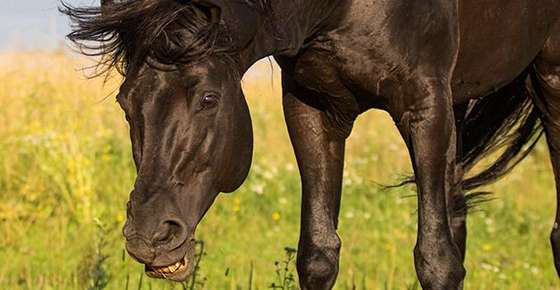
Head shaking shows up in horses as uncontrollable shaking, jerking or flicking of the head, with no obvious physical irritation causing the condition. While some cases may be mild, head shaking can be severe enough to make a horse dangerous or unsuitable for riding. Other symptoms that may occur alongside

Equine
Fractures
Fractures, or breaks, can potentially occur in any bone in a horse’s body. Some types of fractures, however, are more common, especially among very athletic horses, such as racehorses. Causes of Fractures Fractures fall into several categories: An incomplete fracture (also known a “green stick,”

Equine
Food and Nutrition
From your point of view, as the caregiver, it is important to familiarize your horse with being handled-and of course, it is always gratifying to have a horse with a clean and smart appearance. Feeding your horse correctly is a vital element of effective horse care. A horse's natural grazing pattern

Equine
Exerional Rhabdomyolysis (Tying-Up)
Horse lovers have observed this frightening disease for centuries. It’s been called azoturia, tying-up, cording up, holiday disease and Monday morning disease; the last two names reflect that symptoms are sometimes observed after hard work followed by a period of rest. In the last couple of decades,
PRACTICE HOURS
Our Regular Schedule
Our Regular Schedule
Monday
09:00 am - 05:00 pm
Tuesday
09:00 am - 05:00 pm
Wednesday
09:00 am - 05:00 pm
Thursday
09:00 am - 05:00 pm
Friday
09:00 am - 05:00 pm
Saturday
Flexible Schedule
Sunday
Flexible Schedule