
Viewing 79 - 84 out of 92
Veterinary Topics
Newsletter Library
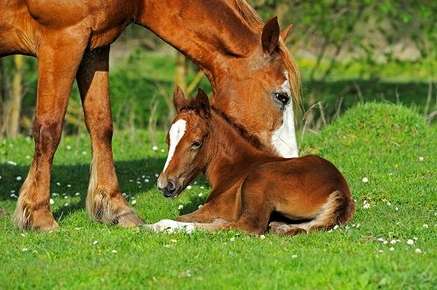
Advances in Equine Breeding & Assisted Reproduction
Assisted equine reproduction has opened up new possibilities in the equine sporting community for horses where this was once limited. With the help of your equine veterinary specialist you can determine if your horse is an ideal candidate for this process either to become artificially inseminated or
Newsletter Library
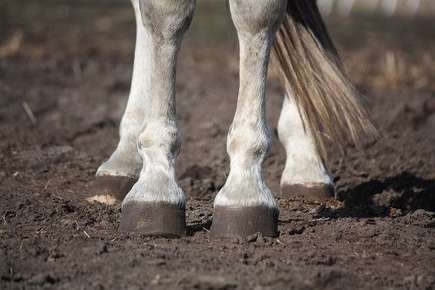
Preventing Thrush in Horses
Thrush is a bacterial infection, and one of the most common diseases, affecting horses’ hooves. You will likely know it when you see — and smell — it. The pungent, tar-like black discharge collects in the sulci, or grooves, along the sides of the frog, the triangular structure that covers about

Newsletter Library
Select the Right Saddle
The right saddle will make a significant difference for both you and your horse and ensure a safe, balanced and relaxing ride. Comfort is key; if the rear of the saddle is up after you cinch the saddle on your horse, or if the saddle wants to roll after you place it on, the saddle is not the correct

Newsletter Library
Strategic Deworming for Equines
If you are a long time horse owner, you may be familiar with traditional parasite control strategies. Traditionally, the most common parasite control approach called for horse owners to deworm their horse year round every six to eight weeks, rotating products. Alternatively, horse owners also could opt
Newsletter Library
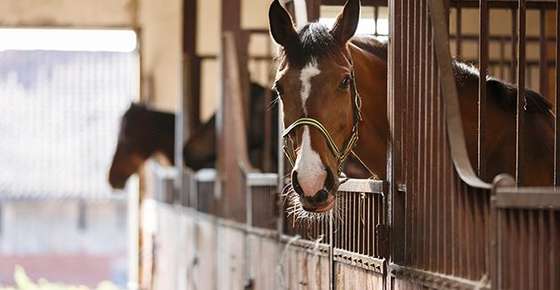
Why You Need to Keep Stalls Clean
How often do you clean your horses’ stalls? Ideally, horse stalls should be cleaned every day and kept as clean as possible. Since horses often lie down in their stalls at night, this behavior means that if you are not keeping the stalls clean, horses could be lying in their own urine or manure –

Newsletter Library
Prevent Incurable Horse Virus
Eastern equine encephalitis virus (EEEV) is transmitted by the bite of an infected mosquito, advises the Centers for Disease Control (CDC). The virus is rare and causes inflammation of the brain called encephalitis. Animals, especially horses, are vulnerable to this infection. "All equine cases are
PRACTICE HOURS
Our Regular Schedule
Our Regular Schedule
Monday
09:00 am - 05:00 pm
Tuesday
09:00 am - 05:00 pm
Wednesday
09:00 am - 05:00 pm
Thursday
09:00 am - 05:00 pm
Friday
09:00 am - 05:00 pm
Saturday
Flexible Schedule
Sunday
Flexible Schedule